Densho Encyclopedia

 Media
Media
Picture brides
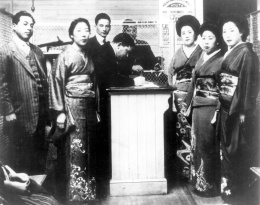
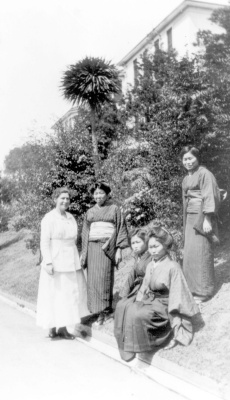
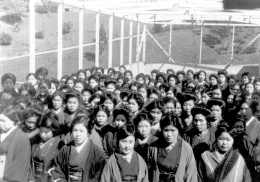
The term picture bride refers to a practice in the early twentieth century in which immigrant workers who married women on the recommendation of a matchmaker who exchanged photographs between the prospective bride and groom. Arranged marriages were not unusual in Japan and originated in the warrior class of the late Tokugawa period (1603-1868). Men and women had different motivations for marrying or becoming a picture bride, and despite these differences, these picture brides, or shashin hanayome, were critical to the establishment of the Japanese community in both Hawai'i and America.
Origins of the Picture Bride Practice
In general, the picture bride practice conformed to traditional marriage customs as parents or relatives in Japan chose wives for single migrant men working in America and Hawai'i. In Japan, heads of households selected marriage partners for family members through an intermediary. These go-betweens ( nakōdo or baishakunin , and, in Hawai'i, the term shimpai came into general use from its meaning "to worry or care about") arranged meetings between family heads who discussed and negotiated proposed unions with little input from the prospective spouses. An exchange of photographs sometimes occurred during the screening process, with family genealogy, wealth, education, and health playing a major role in the selection criteria. [1] Photographs were useful as a means to avoid embarrassment; if one party was rejected, the matter could be quietly resolved without anyone losing face. [2] Along with photographs of themselves, the men forwarded information about their lives in America, which go-betweens used in negotiations with parents of eligible daughters. If the families mutually consented, engagement and marriage ensued.
Picture-bride marriages differed in only one important respect from conventional marriages: the bridegrooms were physically absent from wedding ceremonies. Still, the practice satisfied all social and legal marriage requirements in Japan. Husbands simply had to enter their brides' names into their family registries ( koseki tōhon ). Thus, men and women became legally betrothed no matter where they resided.
Motivations of the Men
Japanese men who had immigrated to Hawai'i and America seeking economic opportunities actively encouraged the arrival of picture brides particularly after the passage of the Gentlemen's Agreement in 1908 that prohibited Japanese travel to the United States and Hawai'i. As a result, the number of disaffected, impoverished Japanese workers who were unable to return to Japan and thus sought to start families abroad increased dramatically. As there were a limited number of women—for every 100 females, there were 447 males in Hawai'i—Japanese men sought the arrival of marriageable women.
Motivations of the Women
No single motive explains why Japanese women came to the United States as picture brides. Women often conformed to familial obligations and social pressures, and married women left behind in Japan responded to their spouses' summons to join them. Other picture brides who were betrothed by parental arrangements simply obeyed their parents. Abiding by parental dictates, they too came to join their spouses. Some picture brides were likely influenced by economic motives to help their families through hard times or to put a younger sibling through school. Families expected daughters to remit money from their work in Hawai'i or America. For poverty-stricken women, marriage with men abroad offered an avenue of escape. Picture bride Kame Iwatani recalled, "It was said that in Hawaii, you can earn money. Everybody used to return home after making money [in Hawaii] . . . When I saw these people, I thought Hawaii had an inexhaustible amount of money." [3] As a woman, she too had heard stories of economic opportunities in the Islands but recognized that "unless you were received as a bride, you couldn't come." Thus, she and many others, facing dire economic circumstances, decided to become picture brides to unknown men thousands of miles away in hopes of a better financial future.
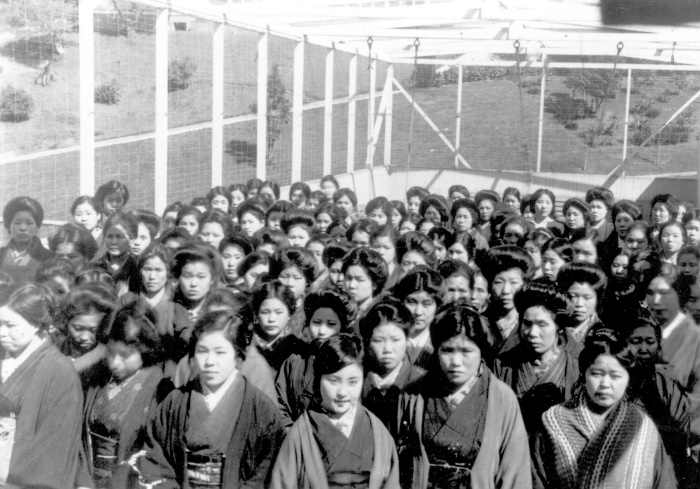
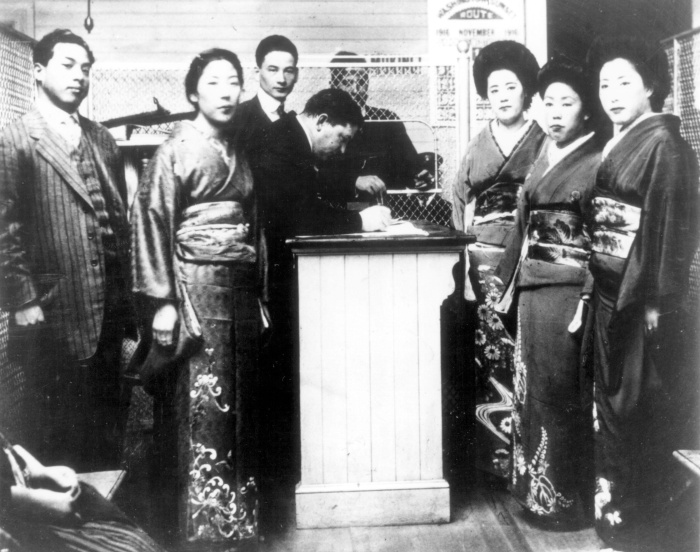
Besides arriving in Honolulu, picture brides arrived in other areas across the West Coast of the United States, including the Port of Seattle, a major entry hub for the Pacific Northwest. Large numbers of picture brides also arrived at the Port of San Francisco, the main entry point to the United States. After being processed at Angel Island Immigration Station, where officials conducted health examinations, interviewed them, and checked their paperwork, the women were reunited with their husbands. [4] Men were also often interviewed about their financial standing and their ability to support a wife to assure officials that their wives were not coming to work and create additional economic competition. Wives also had to demonstrate a legitimate effort to reunite with their husbands, as it was also feared that these were prostitutes, not spouses. As scholar Sonia C. Gomez explains, “Thousands of Japanese women went through the same process of interrogation, a process predominantly concerned with their roles as wives, mothers, and potential wage earners, revealing the ways in which the productive and reproductive labor of women was a source of deep concern for immigration officials." [5] For some, these women posed an economic and social threat with their labor and sexuality, as these picture brides were believed to threaten the economic security and sexual purity of white families.
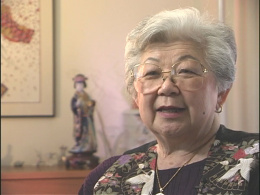
Many picture brides were genuinely shocked to see their husbands for the first time at the Immigration Station. "Picture brides were often disappointed in the man they came to marry," reminisces Kakuji Inokuchi, who remembers the day he went to claim his bride at the Immigration Station. Husbands were usually older than wives by ten to fifteen years, and occasionally more. Men often forwarded photographs taken in their youth or touched-up ones that concealed their real age. Besides sending disingenuous photographs, Japanese men often exaggerated their own attractiveness as future husbands to enable parents or relatives to find wives more easily: sharecroppers described themselves as landowning farmers, small shopkeepers as wealthy merchants, and hotel bellboys as elevator engineers. Few men were culpable of more than hyperboles; they relayed utterly false information about themselves. Picture brides had no way of verifying information before meeting their spouses. In general, they believed what they heard from go-betweens until they arrived in the United States and learned otherwise.
"Some picture brides wanted to go back to Japan—they didn't like the looks of Hawai'i and of the men they had married," remembers Inokuchi. Others who married distant relatives or men they had known in their villages as young girls were shocked and angered. To discourage them from returning, Mr. Katsunuma, the immigration inspector, told them, "Look, since you're in Hawaii, why don't you stay for a while? If you absolutely don't want to stay, then you can go back later. Or you might find another man, because there are lots of single men here. Stay for a few weeks and see how you like it." [6] While some women immediately returned to Japan, others who did not have the financial resources to pay for such a trip tried to make the best of the situation by choosing a more appropriate partner. Women did have greater marital opportunities in Hawai'i and America because of the gender disparity within the Japanese community, and while some Issei marriages did end in divorce or desertion, the majority of men and women accepted the arranged marriage. Kakeochi ads (desertion) appeared in newspapers in Hawai‘i and California and often included physical descriptions of the women and their origins in Japan, details about their partners, and a reward for any information that would help locate the couple. [7]
Roles of Picture Brides in the Japanese Community
As a result of the picture bride practice, the majority of wives who entered immigrant society between 1910 and 1920 came as picture brides. By 1920, over 10,000 picture brides had moved to the continental United States. [8] Between 1911 and 1919, 9,500 Japanese brides arrived in the Islands, beginning a period termed yobiyosei jidai , the period of summoning families. The arrival of these women and the subsequent rise in the number of Japanese births in Hawai'i fostered an attitude of eijū dochaku —to live permanently on the soil. [9] Women were charged with the responsibility of establishing a family that would create the foundations of a permanent community life.
Women's labor was also critical to their families' economic survival, which explains why most women were expected to work while caring for their children and husbands. In California, women often worked on farms where their husbands were cash tenants or sharecroppers, and many who had immigrated from agricultural areas in Japan were familiar with this kind of work. Picture brides who moved to urban areas worked in restaurants, pool halls, bars, markets, boarding houses, laundries, or bath houses, or became cannery workers, seamstresses, or domestic servants. [10] These women engaged in both domestic and outside labor, making the Meiji ideal of ryōsai kenbo (“good wife, wise mother”) impossible for those who worked a “double day.” [11]
By 1920, Japanese women constituted about 80 percent of women on O'ahu plantations, and the percentage of Japanese women working for wages in Hawai'i was higher than that of other ethnic groups.
[12]
Japanese women were concentrated in field operations such as
hoe hana
,
hole hole
work (stripping dried cane leaves), cane cutting, and even the strenuous and backbreaking activity of cane loading. In 1915, Japanese women constituted 38% percent of all Japanese cane loaders. Yet, while women were given many of the same work assignments as men, they were often paid less than their male counterparts. Japanese female field hands, for example, earned an average wage of only $.55 per day in 1915 compared to the $.78 Japanese male field hands received.
[13]
Although many women did not think anything of the pay differential, the discrepancy in women's pay led them to seek out other forms of employment. To explain the decision to look for additional work, one Issei woman simply stated, "Without money, of course, can't eat—must earn money." [14] Thus, many women sought other avenues of revenue in industries both on and off the plantation, embracing an egalitarian entrepreneurial spirit that enabled them to work with and for different ethnicities, including whites, Filipinos, Hawaiians, Koreans, and Portuguese. They capitalized on gender inequities to work in traditional "female" occupations as laundresses, cooks, and seamstresses, but also moved into previously male-dominated industries such as barbering, where they exploited women's lower pay to dominate the field. Some Issei women also had professional training in fields such as midwifery and were respected and known throughout the plantations for their expertise, which helped sustain many communities. Finally, Issei women were involuntarily and voluntarily engaged in prostitution, a lucrative profession for both the women and their pimps. In both the United States and Hawai'i, women's economic success, as well as their exploitation, was directly tied to their femininity, with their sexuality giving rise to new identities and roles in the community.
Legacy
As a result of the picture bride practice, thousands of women arrived in Hawai'i and America seeking greater personal and economic opportunities through marriage to unknown men thousands of miles away. Although women were vulnerable to exploitation because of their unfamiliarity with foreign customs and language barriers, because of the gender imbalance, women did have increased marital opportunities. The necessity of their economic contributions to their families also allowed them to play a greater public role in the community. While the early history of Japanese immigrants has been dominated by Japanese men, picture brides also occupy an important role in understanding the agency and activities of Japanese women.
Picture brides were also instrumental to the growth and stability of many Japanese communities across the West Coast and Hawai̒i. From the 1920s to the 1940s, the Japanese became the dominant ethnic group in Hawai‘i, as the Japanese population steadily increased from 109,274 in 1920 to 157,905 in 1940. [15] This phenomenal growth rate was attributed to an exceptionally high birth rate during this period, due to the arrival of picture brides from Japan. The birth rate reached its highest level in 1925, when 6,186 Japanese births accounted for almost half of the total registered births. [16]
Still today, picture brides remain a critical part of Japanese American history, and their experiences have been captured in film (Kayo Hatta's Picture Bride ) as well as numerous non-fiction and fiction books, such as Yoshiko Uchida's Picture Bride , Julie Otsuka's The Buddha in the Attic , Jeanne Wakatsuki Houston's The Legend of Fire Horse Woman , and many others. Picture brides also play an important role in understanding the agency and activities of Japanese women.
For More Information
Ethnic Studies Oral History Project. Women Workers in Hawaii's Pineapple Industry Volume II . Honolulu: University of Hawai'i, Mānoa, 1979.
Glenn, Evelyn Nakano. Issei, Nisei, War Bride: Three Generations of Japanese American Women in Domestic Service . Philadelphia: Temple University Press, 1986.
Ichioka, Yuji. The Issei: The World of the First Generation of Japanese Immigrants, 1885-1924 . New York: The Free Press, 1988.
Johnson, Colleen L. "The Japanese-American Family and Community in Honolulu: Generational Continuities in Ethnic Affiliation." Ph.D. diss., Syracuse University, 1972.
Kawakami, Barbara F. Japanese Immigrant Clothing in Hawai'i: 1885-1941 . Honolulu: University of Hawai'i Press, 1993.
Kimura, Yukiko. Issei: Japanese Immigrants in Hawai'i . Honolulu: University of Hawai'i Press, 1988.
Mengel, Laurie M. "Issei Women and Divorce in Hawai'i, 1885-1908." Social Process in Hawai'i 38 (1997): 19-39.
Ogawa, Dennis M. Kodomo No Tame Ni: For the Sake of the Children . Honolulu: University of Hawai'i Press, 1978.
Takaki, Ronald. Pau Hana: Plantation Life and Labor in Hawaii, 1835-1920 . Honolulu: University of Hawai'i Press, 1984.
Yamamoto George K. and Tsuyoshi Ishida, eds. Selected Readings on Modern Japanese Society . Berkeley, California: McCutchan Publishing Corporation, 1971.
Footnotes
- ↑ Barbara F. Kawakami, Japanese Immigrant Clothing in Hawai'i: 1885-1941 (Honolulu: University of Hawai'i Press, 1993), 10.
- ↑ George K. Yamamoto and Tsuyoshi Ishida eds., Selected Readings on Modern Japanese Society (Berkeley, California: McCutchan Publishing Corporation, 1971), 16-17.
- ↑ Ethnic Studies Oral History Project, Women Workers in Hawaii's Pineapple Industry Volume II (Honolulu: University of Hawai'i, Mānoa, 1979), 839.
- ↑ Jemma Fagler, "The 'Picture Bride Problem': Experiences of and Attitudes Toward Japanese Picture Brides in California 1908-1920." PhD diss. (Georgetown: Georgetown University Press, 2018) 36-37.
- ↑ Sonia C.Gomez, Picture Bride, War Bride : The Role of Marriage in Shaping Japanese America (New York: New York University Press, 2024),12.
- ↑ Ibid.
- ↑ Kakeochi ads (desertion) appeared in newspapers in Hawai‘i and California and often included physical descriptions of the women and their origins in Japan, information about their partners, and a reward for any information to help locate the couple.
- ↑ Fagler, 46.
- ↑ In the years of 1920 and 1921, the Japanese birthrate climbed to a level exceeded only by part-Hawaiians. Between 1920 and 1937, the number of Nisei, or second generation, rose from 38,127 to 113,289. Colleen L. Johnson, "The Japanese-American Family and Community in Honolulu: Generational Continuities in Ethnic Affiliation," (Ph.D. diss., Syracuse University, 1972), 58; Ogawa, 80.
- ↑ Yuji Ichioka, The Issei : The World of the First Generation Japanese Immigrants, 1885-1924 (New York: Free Press, 1988), 168.
- ↑ Sharon L. Shievers, Flowers in the Salt: The Beginnings of Feminist Consciousness in Modern Japan (Stanford: Stanford University Press, 1985); Evelyn Nakano Glenn, “Cleaning Up/Kept Down: A Historical Perspective on Racial Inequality in ‘Women’s Work,’” Stanford Law Review 43:6 (July 1991): 1334.
- ↑ Kawakami, 194.
- ↑ Ronald Takaki, Pau Hana: Plantation Life and Labor in Hawaii, 1835-1920 (Honolulu: University of Hawaii Press, 1984), 78.
- ↑ Women Workers in Hawaii's Pineapple Industry, 858.
- ↑ Dorothy Ochiai Hazama and Jane Okamoto Komeiji, Okage Same De: The Japanese in Hawaii 1885-1985 (Honolulu: Bess Press, 1986), 110.
- ↑ Hazama and Komeiji, 111.
Last updated May 27, 2026, 7:58 p.m..