Densho Encyclopedia

 Media
Media
Japanese language schools
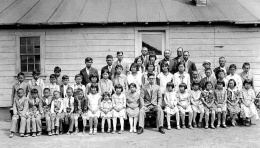
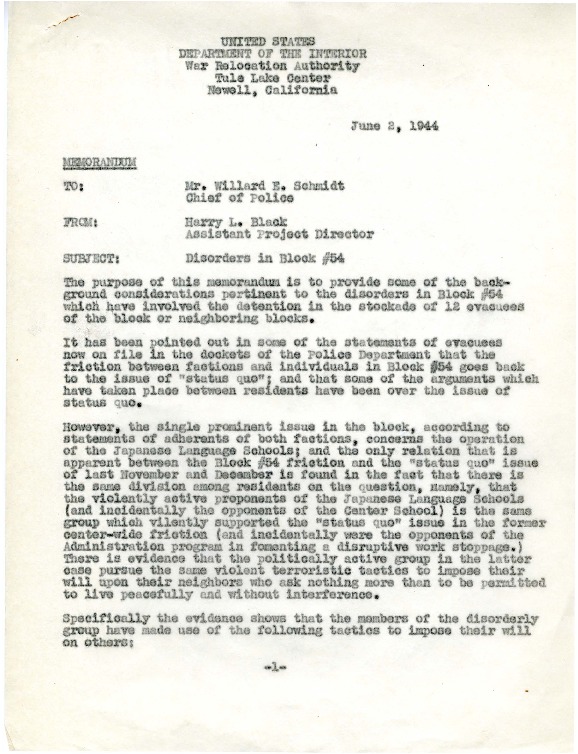
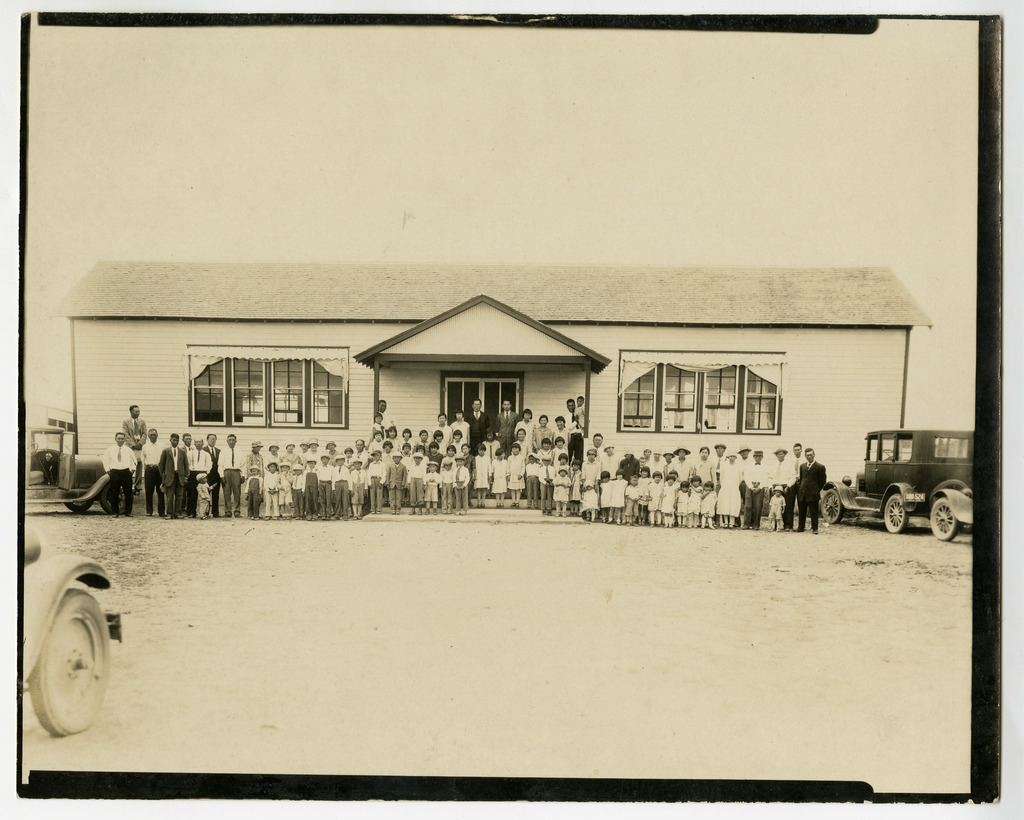
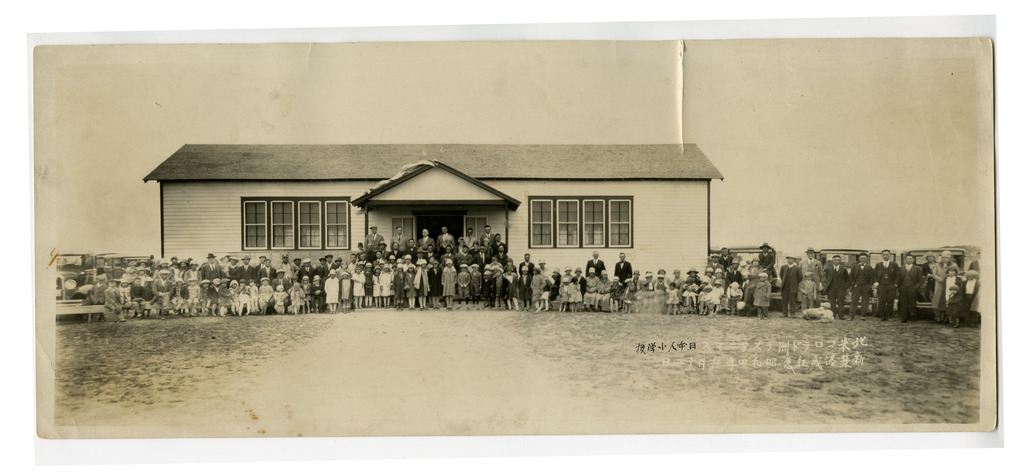
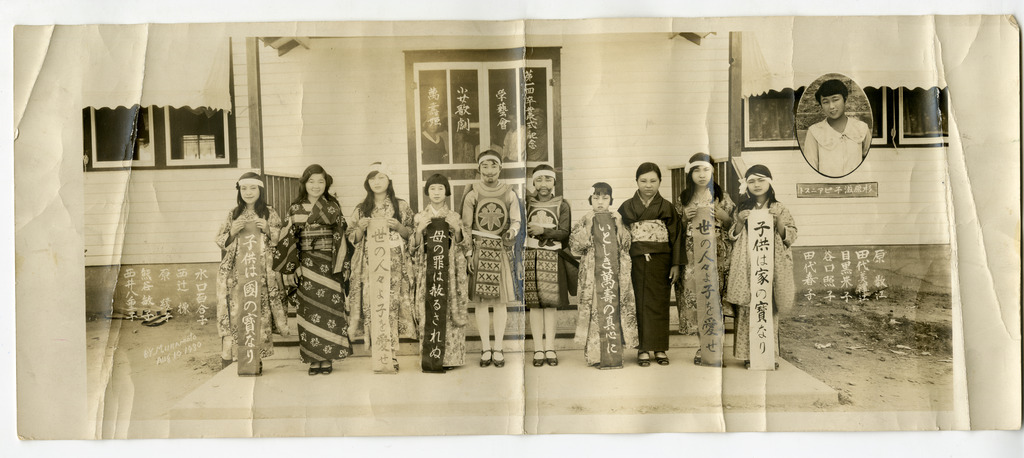
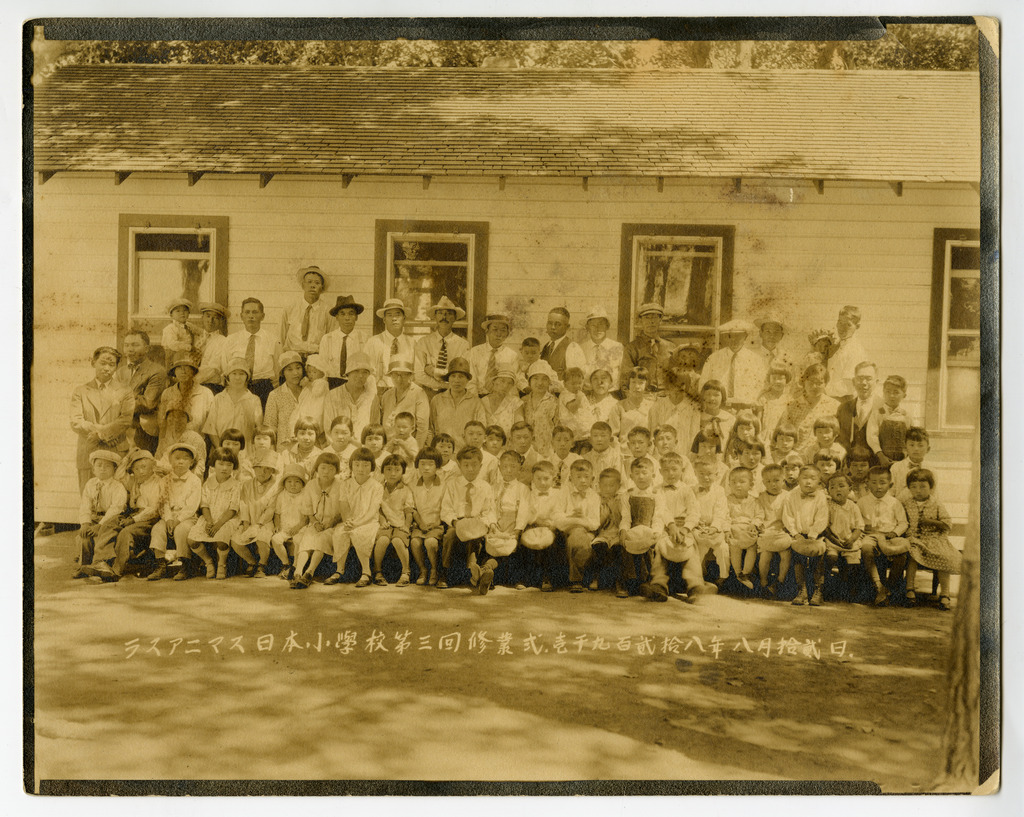
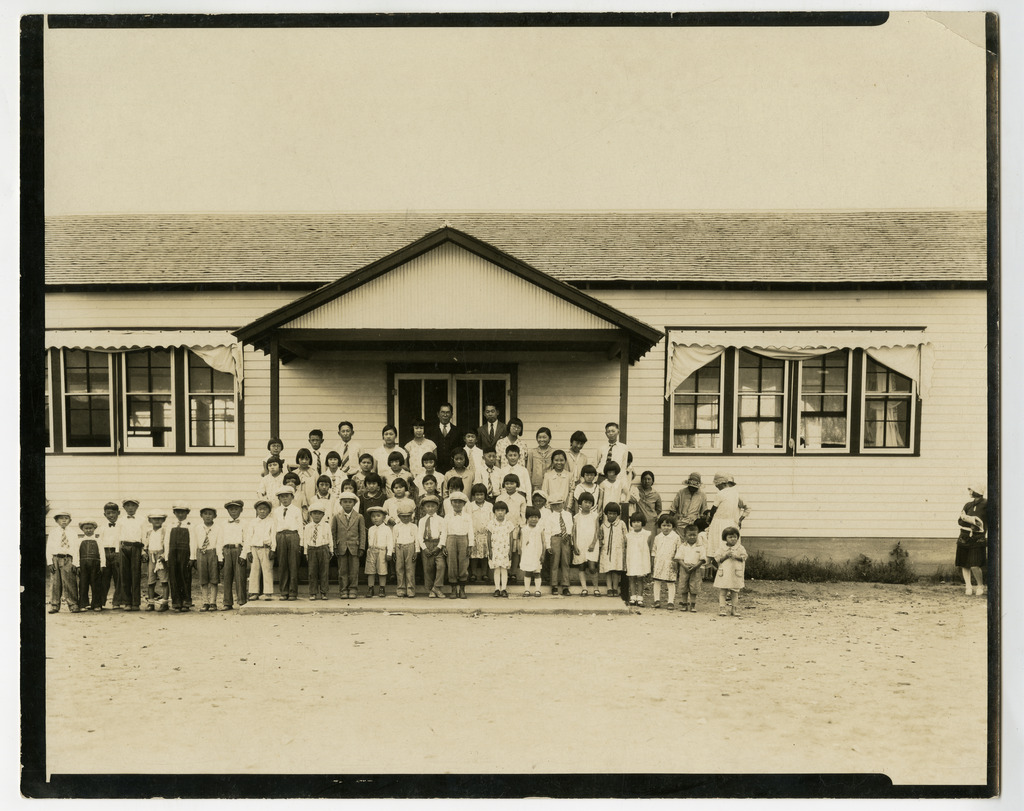
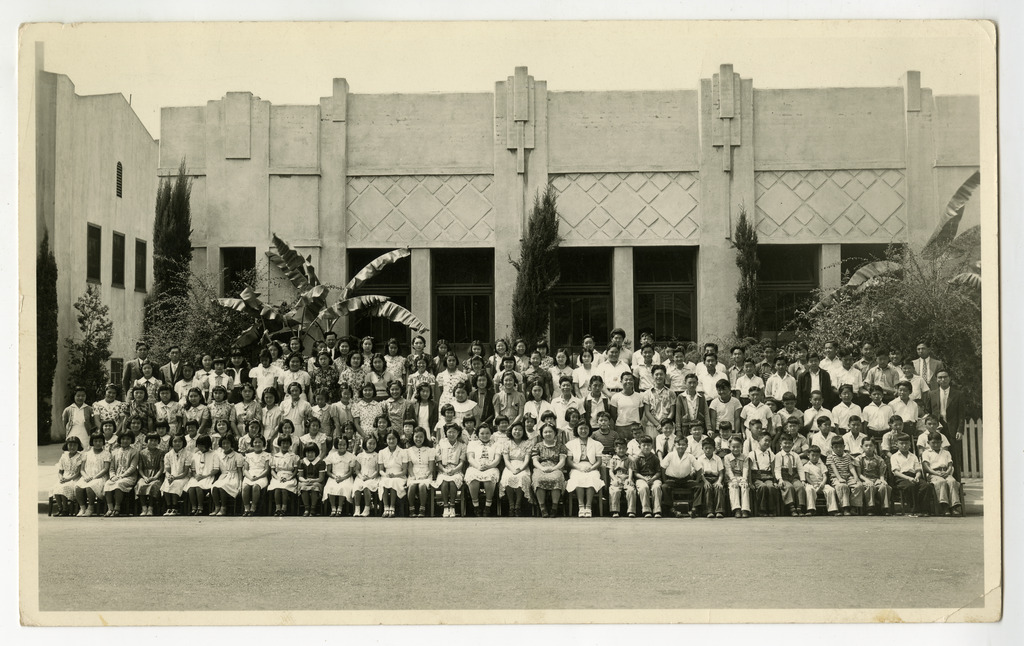
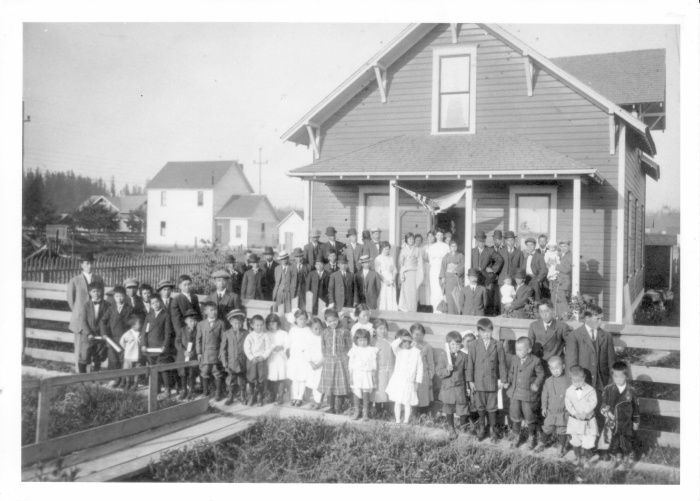
Since the establishment of Japanese communities in Hawai'i and on the mainland, many Japanese children have attended Japanese language schools that were often associated with Buddhist or Christian churches. However, Japanese language schools soon became sites of controversy as some whites perceived them as institutions that taught not just language but also supported nationalistic Japanese sentiment.The debate over the “Japanese language school problem” occurred not just in Hawai‘i, but also in California and Washington, where activists sought to curb Japanese immigration and economic opportunities. These events highlighted how the debate over Japanese language schools was intertwined with larger social and economic issues and the growing perception of the “threat” of Japanese in America in the pre-World War II period. [1]
Historical Background of Japanese Language Schools
To develop a more stable labor force and ensure Japanese children could easily transition to schools upon their return to Japan, both sugar planters in Hawai'i and their Issei parents encouraged the growth of Japanese-language schools that also provided needed childcare for Japanese laborers who worked during the day.
In 1893, Reverend Shigefusa Kanda established the first Japanese-language school at Kohala on the island of Hawai'i, followed by the school established by Methodist missionary Reverend Tamaki Gomi on Maui. In Honolulu, Reverend Takie Okumura, a graduate of Dōshisha University of Theology, began Honolulu's first Japanese school, the Honolulu Nihonjin Shōgakkō (Japanese Elementary School), with thirty students in 1896. Classes were held after public school for one to two hours, and students six years and older could attend. Following the efforts of Christians, in 1898 the Honpa Hongwanji (Jōdoshinshū, the True Pure Land Buddhist sect) opened three Japanese schools on the Big Island, followed by one on Kaua'i in 1900. In Honolulu, Reverend Hiseki Miyazaki started the Hongwanji Fuzoku Shōgakkō (elementary school attached to Hongwanji) in 1902 with 162 students. Although Christian and Buddhist schools competed for students, both of their curricula were based on the presumption that the children would return to Japan with their families.
The first Japanese-language school in North America, and one of the oldest non-religious Asian-language schools in the United States, was the Seattle Kokugo Gakkō, or Japanese National Language School, established in July 1902. In California, a Christian couple, Mr. and Mrs. Keizō Sano, established the Nihon Shōgakkō (Japanese Elementary School) in 1902 at a San Francisco home between O'Farrell and Ellis streets; the following year, Hongwanji Buddhist missionaries started Meiji Shōgakkō on Polk Street. In 1903, another Hongwanji-affiliated school, the Sakura Gakuen, opened at the southern end of the town of Sacramento. Despite the schools' economic struggles and the lack of children, they became an integral part of the Japanese community. [2]
At Japanese language schools, students studied Japanese language, culture, and other subjects from Japan's national curriculum. The schools were primarily supported by tuition and subsidized by the ethnic communities and by the sugar planters in Hawai'i; occasionally, the Japanese consulate also supported students. While some teachers were hired locally, many were recruited from Japan. Schools would submit a request to the Japanese consulate, which would forward it to the Japanese Ministry of Education (Monbushō). Those selected were usually certified, experienced teachers, and in many cases, a couple was recruited together to operate a language school.
Historical Controversy Surrounding the Japanese Language Schools
Despite their innocuous beginnings—other ethnic groups had their own language schools after all—Japanese language schools soon became embroiled in controversy as they became associated with labor movements, issues of loyalty and national allegiance, and growing local and national anti-Japanese sentiment. In Hawai'i, Japanese Buddhist priests and language instructors played a significant role in the 1920 strike and officials subsequently believed that language schools were important institutions in the indoctrination of a "Mikado-worship" that inculcated these migrants with anti-American attitudes. [3]
In 1920, the Federal Commission of Education, reporting on the status of public instruction in Hawai'i, noted the existence of 163 Japanese language schools educating nearly 20,000 students. The commission concluded that Nisei students who attended the schools "are being retarded in accepting American customs, manners, ideals, principles, and standards," as these schools formed considerable "obstacles" to the Americanization of the second-generation Japanese. [4] The report recommended that the language schools' functions be assumed by the public education system. To many in Hawai'i, such a suggestion coincided with their belief that the maintenance of the language schools was an un-American act by minorities who wished to preserve their ties to their homeland. As such, in April 1923, the legislature enacted the Clark Bill that imposed a yearly one-dollar tax per language school student. This bill was designed to curb the operations of the language schools and in response, many schools temporarily closed their doors rather than pay the discriminatory tax. [5]
The same critiques spread to California, where the language school issue became tied to issues of land ownership as anti-Japanese exclusionists associated the language schools with pro-Japanese sentiment. In an effort to pass a more stringent alien land bill in 1919, exclusionists made the Nisei the focus of their anti-Japanese sentiment. On August 2, 1921, the Parker Bill went into effect, which required that teachers and administrators at foreign language schools be licensed by the Superintendent of Public Instruction, demonstrate knowledge of American history and English language skills, and pledge to make pupils good and loyal American citizens. Hours of operation were further restricted, and the Superintendent of Public Instruction was given full control over the course of study and textbooks, as well as the authority to issue and revoke teaching permits. [6]
In Washington State, similar efforts to control Japanese language schools were enacted by legislators who “invariably copied” California’s anti-Japanese measures. [7] During the 1919 hearings conducted by the House Immigration and Naturalization Committee in Washington, D.C., anti-Japanese exclusionists testified about the growing political power of Japanese immigrants and the nationalistic nature of Japanese language education in an effort to curtail Japanese land ownership and business success. Exclusionists were highly critical of the Nisei and focused on Japanese language schools to challenge Nisei American citizenship. Some public school administrators even blamed the language schools for delaying the Nisei’s mastery of English and assimilation into American society. While Japanese language schools in Washington State did not close down, educators and students still had to contend with growing racism and political turmoil that also existed in California and Hawai‘I in the pre-World War II period.
Collectively, these events and attitudes supported a growing anti-Japanese movement in the continental United States and Hawai'i, as Japanese were increasingly confronted by a series of rulings and laws that federal and local authorities specifically enacted to control the Japanese "threat." In 1922, territorial officials charged and convicted the 1920 strike leaders for conspiracy, the same year that the United States Supreme Court denied the petition of Hawai'i resident Takao Ozawa for the right to citizenship in the landmark case of Ozawa v. United States . Two years after the Ozawa ruling, Congress passed the 1924 Exclusion Act , which effectively banned Japanese immigration to Hawai'i and the United States and prohibited travel to America. Collectively, these events signaled a new era of tighter oppression by political and economic leaders in Hawai'i and by federal officials in Washington. Eventually, Japanese language school teachers and principals would be among the first to be apprehended and incarcerated during World War II; that war also marked the closures of these schools to promote American attitudes and behaviors.
Japanese Language Schools and Nisei Identity
Despite white fears of the anti-American influence of the language schools, evidence suggests that Japanese language schools were far from effective at importing language proficiency and allegiance to Japan. According to author Bill Hosokawa , "many Nisei resented the time they had to devote to Japanese language school as well as the discipline they had to endure." [8] As such, language schools failed to impart sufficient fluency to the Nisei. During World War II, when military officials sought Japanese linguists skilled in interpretation, translation, and interrogation for intelligence activities, very few individuals qualified. In an initial survey of 3,700 Nisei, Military Intelligence Service Language School (MISLS) officials deemed only three percent accomplished linguists. They considered another four percent or so proficient, and they found that another three percent could only be useful after a prolonged period of training. [9] The vast majority of Nisei seemed more American than Japanese and were less fluent in Japanese than previously believed. These findings not only seemed to indicate the success of Americanization campaigns and Japanese language school closures, but also that American fears of Japanese espionage that were used to justify the mass incarceration of Japanese Americans were unfounded. Ironically, it became evident to military officials that a special training school would be required to transform the Nisei into competent Japanese linguists who would serve a critical role in the Military Intelligence Service (MIS).
After the war, Japanese-language schools reopened, and students continued to attend Japanese-language classes after attending English school, although not to the same extent as in earlier periods. Presently, many language schools have become Japanese Heritage Schools (JHS), weekend language school that usually provides supplementary education for half a day on Saturday. Children of Nikkei and shin Issei parents often attend these schools, although all community members are welcome. Due to the growing diversity of the Nikkei community, JHS teaching goals have also expanded to address the needs of the increasingly multicultural, multiracial student body. As author Trotia Toyota explains, “Also reflective of the transformation of the student body, knowledge about the meanings of Japanese cultural processes and values, as well as the significance of Nikkei history, were included.” [10] As language schools continue to evolve, further research is needed on the importance of Japanese schools in increasingly multicultural communities and their impact on future generations and Japanese American identity.
For More Information
Asato, Noriko. Teaching Mikadoism: The Attack on Japanese Language Schools in Hawaii, California, and Washington, 1919-1927 . Honolulu: University of Hawai'i Press, 2006.
Hanaoka, Yoichi. "The Japanese Language School; Is it a Help or a Hindrance to the Americanization of Hawaii's Young People." Friend xcvii (April 1927): 79-89.
Hosokawa, Bill. Nisei: The Quiet Americans Revised Edition . Colorado: University Press of Colorado, 2002.
Ichioka, Yuji. Before Internment: Essays in Prewar Japanese American History . Stanford, California: Stanford University Press, 2006.
MacCaughey, Vaughan. "Some Outstanding Educational Problems of Hawaii." School and Society 9 (January 1919): 100-101.
Matsubayashi, Yoshihide. "The Japanese Language Schools in Hawaii and California from 1892 to 1941." Ed. D. diss., University of San Francisco, 1984. MISLS Album, 1946 . Nashville: Battery Press, 1946.
Morimoto, Toyotomi. Japanese Americans and Cultural Continuity: Maintaining Language and Heritage . New York: Garland Pub., 1997.
Ogawa, Dennis M. Kodomo no tame ni: For the sake of the children, The Japanese American Experience in Hawaii . Honolulu: University of Hawaii Press, 1978.
Tamura, Eileen H. "The Americanization Campaign and the Assimilation of the Nisei in Hawaii, 1920 to 1940." Ph.D. diss., University of Hawaii, 1990.
United States. Office of Education. A Survey of Education in Hawaii, Made Under the Direction of the Commissioner of Education . Washington: Govt. Print. Off., 1920.
Footnotes
- ↑ Research for this article was supported by a grant from the Hawai‘i Council for the Humanities .
- ↑ Noriko Asato, Teaching Mikadoism: The Attack on Japanese Language Schools in Hawaii, California, and Washington, 1919-1927 (Honolulu: University of Hawai'i Press, 2006), 45. It is important to note that the social milieus in which Japanese language schools emerged differed considerably across regions, in part due to attendance rates. In Hawai'i, over 20,000 Nisei, or 97 percent of the school-aged population, attended Japanese language schools in 1920. In contrast, only 3,000 California Nisei, or 42 percent of all Nisei students in public schools, attended Japanese language schools, and only 489 students in Washington represented approximately 30 percent of Japanese American students. Asato, 109.
- ↑ Vaughan MacCaughey, "Some Outstanding Educational Problems of Hawaii," School and Society 9 (January 1919): 100-101; Eileen H. Tamura, "The Americanization Campaign and the Assimilation of the Nisei in Hawaii, 1920 to 1940" (Ph.D. diss., University of Hawaii, 1990), 16.
- ↑ United States Office of Education, A Survey of Education in Hawaii, Made Under the Direction of the Commissioner of Education (Washington: Govt. Print. Off., 1920), 134.
- ↑ Dennis M. Ogawa, Kodomo no tame ni: For the sake of the children, The Japanese American Experience in Hawaii (Honolulu: University of Hawaii Press, 1978), 143-144.
- ↑ Asato, 67.
- ↑ Asato, 83.
- ↑ Bill Hosokawa, Nisei: The Quiet Americans Revised Edition (Colorado: University Press of Colorado, 2002), 159.
- ↑ MISLS Album, 1946 (Nashville: Battery Press, 1946), 8.
- ↑ Tritia Toyota, Intimate Strangers : Shin Issei Women and Contemporary Japanese American Community , 1980-2020 (Philadelphia: Temple University Press, 2023), 110.
Last updated May 27, 2026, 7:14 p.m..