Densho Encyclopedia

 Media
Media
Wakako Yamauchi
| Name | Wakako Yamauchi |
|---|---|
| Born | October 24 1924 |
| Died | August 16 2018 |
| Birth Location | Westmorland, CA |
| Generational Identifier |
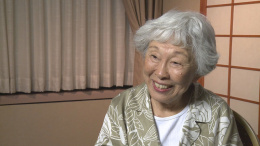
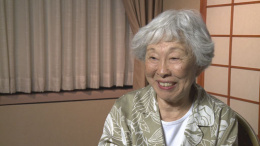
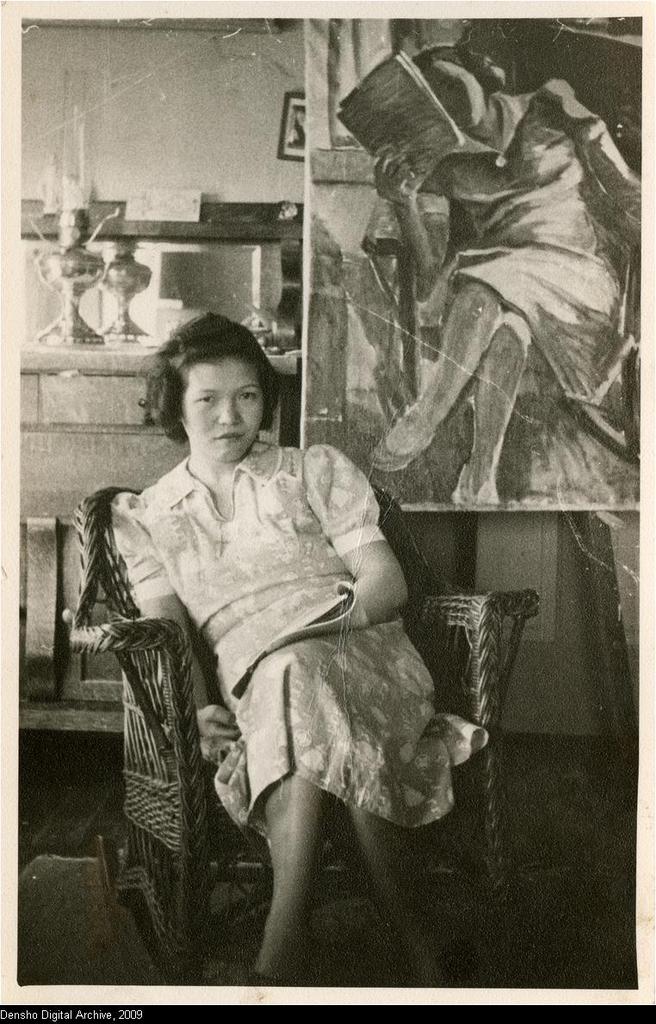
Wakako Yamauchi (1924–2018) was a distinguished playwright, short-story writer, poet and painter. Through her creative work, Yamauchi draws portraits of people who struggle with their dreams and passions, while facing the psychological trauma of prejudice, economic depression, and the concentration camps of World War II. As a young child and adult, she witnessed the overt racism and harsh labor conditions her parents endured and later built these and other personal memories into the details of her work.
She was born Wakako Nakamura on October 24, 1924, in Westmorland, California to immigrant parents Yasaku and Hama Nakamura, who farmed in the Imperial Valley, near the Mexican border, and was one of four children. Yamauchi's mother assisted her husband in the fields, but also taught Japanese on Sundays at the Buddhist church. In 1940, following a major earthquake and the failure of that season’s lettuce crop, the family moved to Oceanside, California, where her mother worked as a cook, and then manager of a board house for day workers on Santa Margarita Ranch, now Camp Pendelton. [1]
When Yamauchi was seventeen years old, she and her family were incarcerated at Poston concentration camp in Arizona (in barrack apartment 12-1-A—the title of a play she would later write). In Poston, she met young Nisei writer Hisaye Yamamoto , a few years her senior and already established in the Japanese American press. Both women worked on the camp newspaper, the Poston Chronicle , as layout artist and contributing writer, and shared an interest in art and literature. The two maintained a close, life-long friendship of inspiration and artistic support.
After a year and a half at Poston, Yamauchi relocated to Utah and then to Chicago , where she worked at Curtiss Candy factory, spent weekends at the Art Institute of Chicago, and began attending plays, marking the beginning of her love for theater. In the summer of 1945, she received notice from her mother back in Poston that her father was gravely ill and rushed back by train to Arizona, only to arrive in the midst of her father’s wake. [2] The Nakamuras were one of the last families to leave Poston on August 14, 1945. They relocated to San Diego, California, where they lived in a government-owned trailer. Wakako and her sister Yukiko found work at a nearby photo processing factory, before Wakako decided to return to Los Angeles to join her friend Hisaye Yamamoto, who by then, was writing for the Los Angeles Tribune, a prominent Black weekly newspaper. Yamauchi enrolled at the Otis Art Center and studied painting.
In 1948, she married Chester Yamauchi and settled in Mid-City Los Angeles. Wakako worked a variety of jobs, such as working at a factory and department store, and hand-painting flowers and flamingos on shower curtains. [3] In 1955, she bore a daughter named Joy. She also took a correspondence course in short story writing, which helped her to start writing. In 1960, Henry Mori, editor of the Rafu Shimpo newspaper, who was familiar with Yamauchi’s artwork in the Poston Chronicle, asked her to contribute some illustrations to their annual holiday edition. She agreed, on the condition that she would do the drawings if he would publish her stories. From that year on until 1974, Yamauchi contributed a short story or essay to the newspaper's special edition and began focusing on writing. Although the couple divorced that same year, she continued to write and publish under her married name.
In the 1970s, a group of Asian American writers organized a landmark anthology entitled Aiiieeeee! , which published Yamauchi’s short story, "And the Soul Shall Dance" after Hisaye Yamamoto suggested it for inclusion. East West Players’ artistic director Mako read the story and with support from a Rockefeller Playwright-in-Residence grant, convinced Yamauchi to turn it into the script for a play. "And the Soul Shall Dance" was first performed on February 3, 1977 at the East West Players theater in Los Angeles, winning the Los Angeles Drama Critics Circle Award for best new play of 1977 and was excerpted in the Burns Mantel Theatre Yearbook for 1976-1977. It was later produced as a television drama for the PBS station KCET in Los Angeles in 1978 and was produced in New York (in 1979 and again in 1990.) Yamauchi continued her career as a playwright, writing several other scripts including ”12-1-A” (first produced in 1982), ”The Music Lesson" (based on her short story, "In Heaven and Earth," first produced in 1985), and “The Memento” (first produced in 1986).
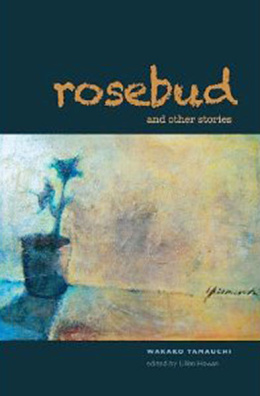
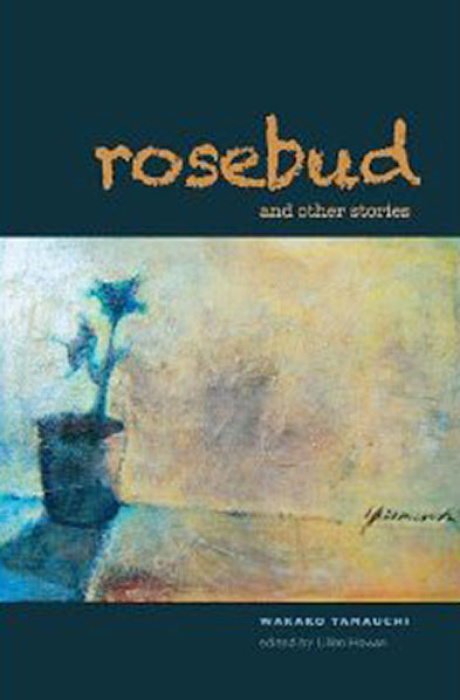
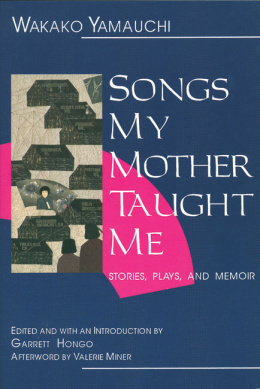
Her stories appeared in numerous other anthologies, including Counterpoint: Perspectives on Asian America (1976), Home to Stay: Asian American Fiction by Women, edited by Sylvia Watanabe and Carol Bruchac (1990), The Politics of Life: Four Plays by Asian American Women (1993), edited by Velina Hasu Houston, Unbroken Thread: An Anthology of Plays by Asian American Women (1993), edited by Josephine Lee, Making More Waves: New Writing by Asian American Women, edited by Elaine H. Kim, Lilia V. Villanueva, and Asian Women United of California (1997), and the academic publication Amerasia Journal (Volume 7, 1980.) She published two seminal collections of her plays and stories, Songs My Mother Taught Me: Stories, Plays, and Memoir (1994), and Rosebud and Other Stories (2011.)
Some of her best literary works explore how the experiences and aspirations of her generation, seen through a distinct Japanese American woman's perspective, collide with obstacles of race and class discrimination. Yamauchi deftly draws from her life experiences and observations—of her immigrant parents and the tension between the two generations, the trauma of World War II, post-war resettlement and assimilation, and the process of aging—to create her art. Many of her stories depict Issei and Nisei women who grapple with the barriers of gender and ethnicity, while simultaneously resisting the patriarchal norms and the consequences of their self-expression and desire for independence. [4] She has since received numerous awards and fellowships, including several Rockefeller grants, the Brody Art Fund Fellowship, and the American Theater Critics Regional Award for Outstanding Play.
She spent her last years writing short, semi-autobiographical stories and wrote the script for a documentary, Nurtured by Love about Dr. Shinnichi Suzuki, inventor of the Suzuki method of music instruction, in 1996. Wakako died of cardiac arrest at her home in Gardena on August 16, 2018 at age 93. The Los Angeles Times reported at her passing, “Tim Dang, former artistic director of East West Players, cited Yamauchi as one of four Asian American playwrights — with Edward Sakamoto, Jon Shirota and Frank Chin — who could be considered pioneers for future generations. She was the only woman of the group, and her plays featured another theatrical rarity: strong female protagonists. Her work cast an unflinching look at cultural identity, and she was the first playwright to truly mine the Issei (first generation) and Nisei (second generation) Japanese American experience.” [5]
Posthumously, Yamauchi was honored in numerous remembrances, such as the International Examiner’s “Songs we didn’t know we had…Remembering writer Wakako Yamauchi” and at “Race, Identity, and Incarceration: A Centennial Tribute to Wakako Yamauchi” event in San Francisco held in 2024 and her plays continue to be staged at theaters across the US. In 2025, the University of California Los Angeles Film and Television Archives acquired KCET Hollywood Television Theater's adaptation of "And the Soul Shall Dance," that was originally televised in 1978. A public screening of the restored, remastered drama was held, with a panel discussion on the significance of Yamauchi's legacy, on February 28, 2026 in Los Angeles. Her archives are housed at the Japanese American National Museum and include play scripts, correspondence, short stories, promotional materials, reviews, contracts, and photographs.
For More Information
Barall, Michi. “On The Music Lessons by Wakako Yamauchi.” [1] Accessed February 24, 2026.
Cheung, King-kok, and Stan Yogi. Asian American Literature: An Annotated Bibliography . New York: Modern Language Association of America, 1988.
Gelt, Jessica, “Wakako Yamauchi, a pioneer playwright of the Japanese American experience,” Los Angeles Times, August 24, 2018. [2] Accessed February 24, 2026.
Houston, Velina Hasu, ed. The Politics of Life: Four Plays by Asian American Women . Philadelphia: Temple University Press, 1993.
Levine, Ross M. "Wakako Yamauchi, Japanese American Soul." Discover Nikkei website, January 11, 2019. Accessed February 24, 2026.
McDonald, Dorothy Ritsuko, and Katherine Newman. "Relocation and Dislocation: The Writings of Hisaye Yamamoto and Wakako Yamauchi." MELUS 7.3 (fall 1980).
Osborn, William P., and Sylvia Watanabe. "A Conversation with Wakako Yamauchi." In Into the Fire: Asian American Prose . Edited by Sylvia Watanabe and Carol Bruchac. New York: Greenfield Review Press, 1996, 163–73.
Words, Weavings & Songs . Documentary video produced and directed by John Esaki. Frank H. Watase Media Arts Center, Japanese American National Museum, 2002. 34 min.
Yamauchi, Wakako. Songs My Mother Taught Me: Stories, Plays and Memoir . New York: Feminist Press at CUNY, 1994.
———. Rosebud and Other Stories . Honolulu: University of Hawaii Press, 2011.
Yamauchi (Wakako) Papers, 1970s-2003. Japanese American National Museum.
Footnotes
- ↑ Ross M. Levine, "Wakako Yamauchi, Japanese American Soul" Discover Nikkei website, January 11, 2019.
- ↑ Ross M. Levine, "Wakako Yamauchi, Japanese American Soul" Discover Nikkei website, January 11, 2019.
- ↑ Ross M. Levine, "Wakako Yamauchi, Japanese American Soul" Discover Nikkei website, January 11, 2019.
- ↑ Stan Yogi, "Wakako Yamauchi," in The Politics of Life: Four Plays by Asian American Women , ed. Velina Hasu Houston (Philadelphia: Temple University Press, 1993): 39-40.
- ↑ Gelt, Jessica, “Wakako Yamauchi, a pioneer playwright of the Japanese American experience,” Los Angeles Times, August 24, 2018.
Last updated March 2, 2026, 6:07 p.m..